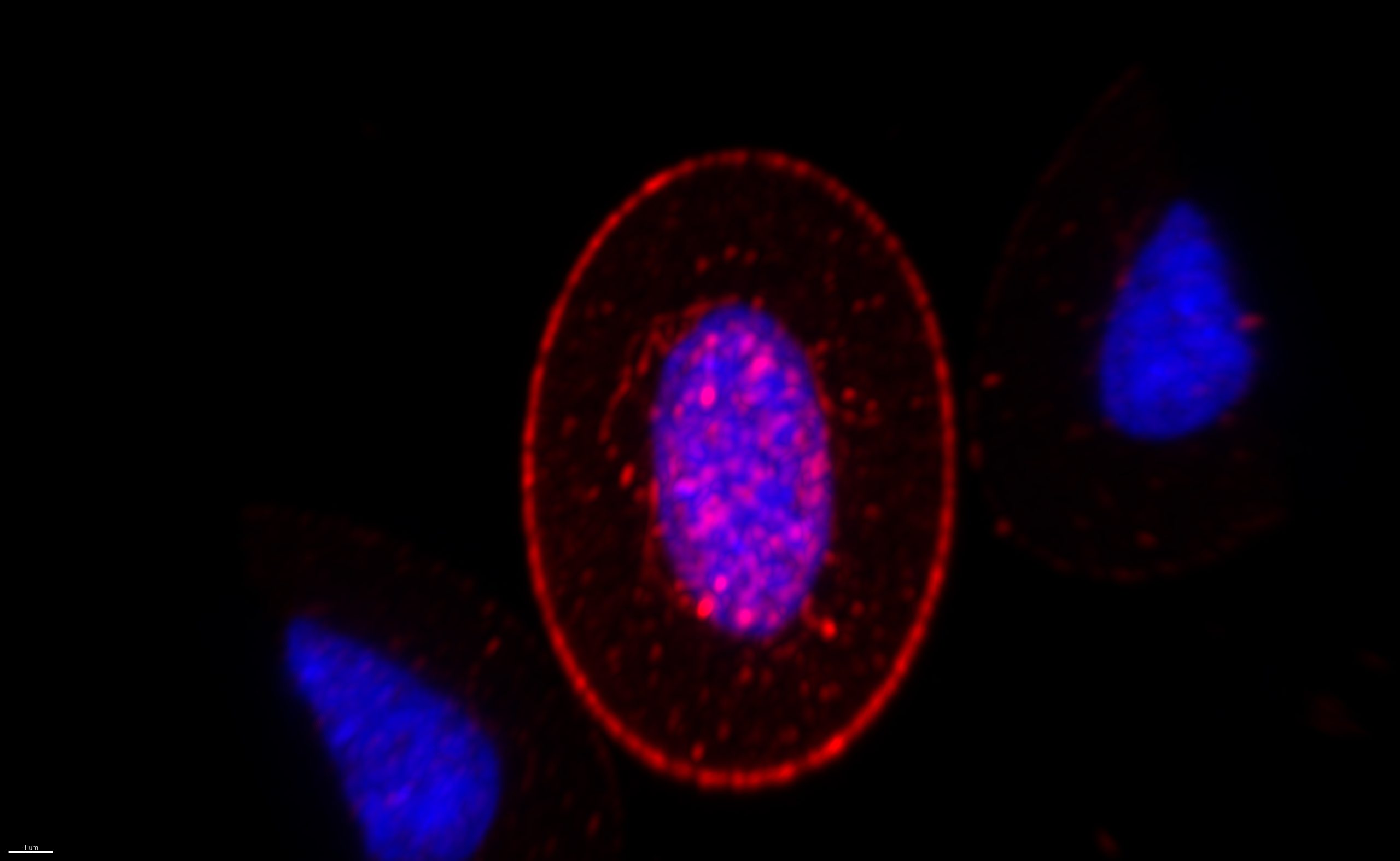
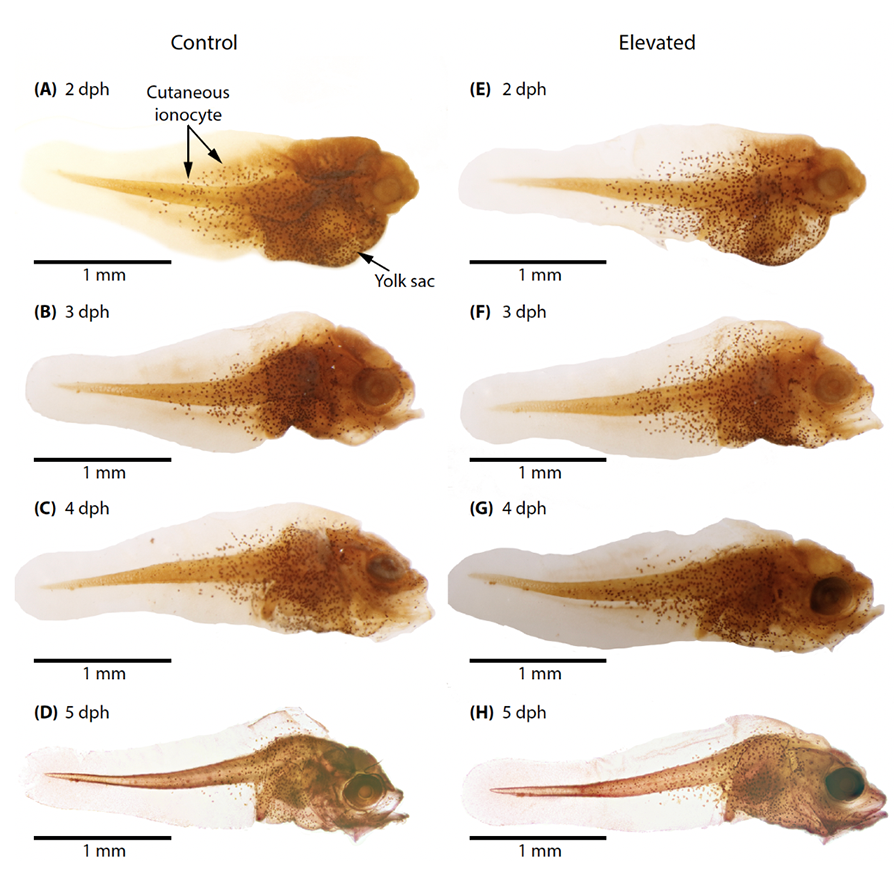
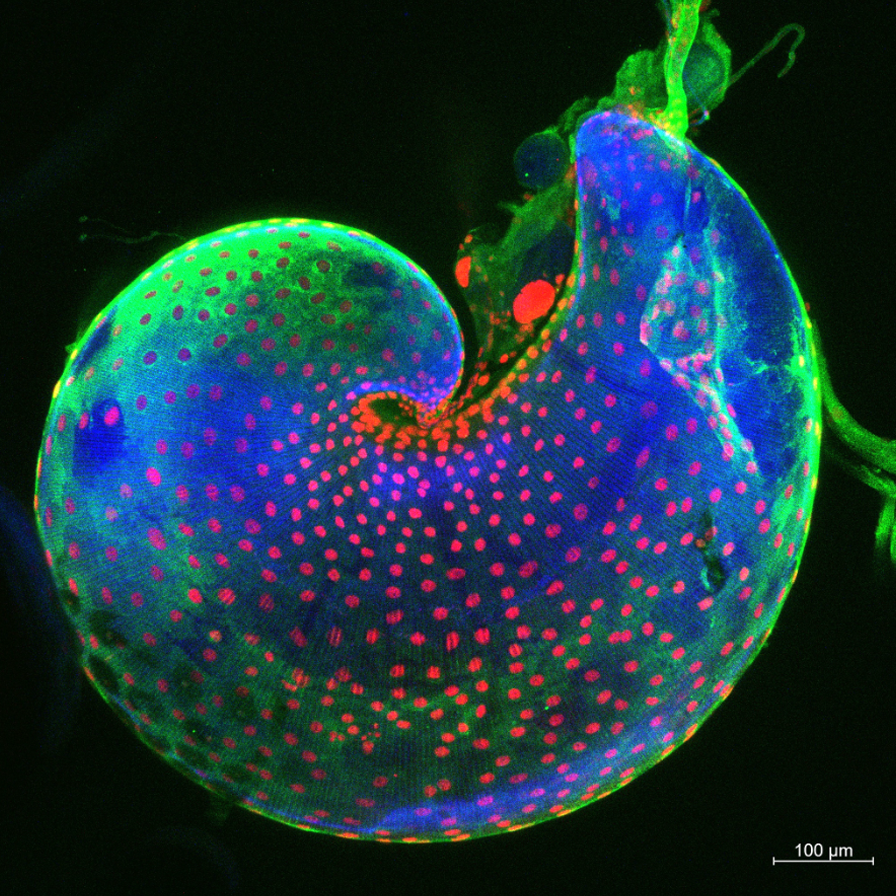
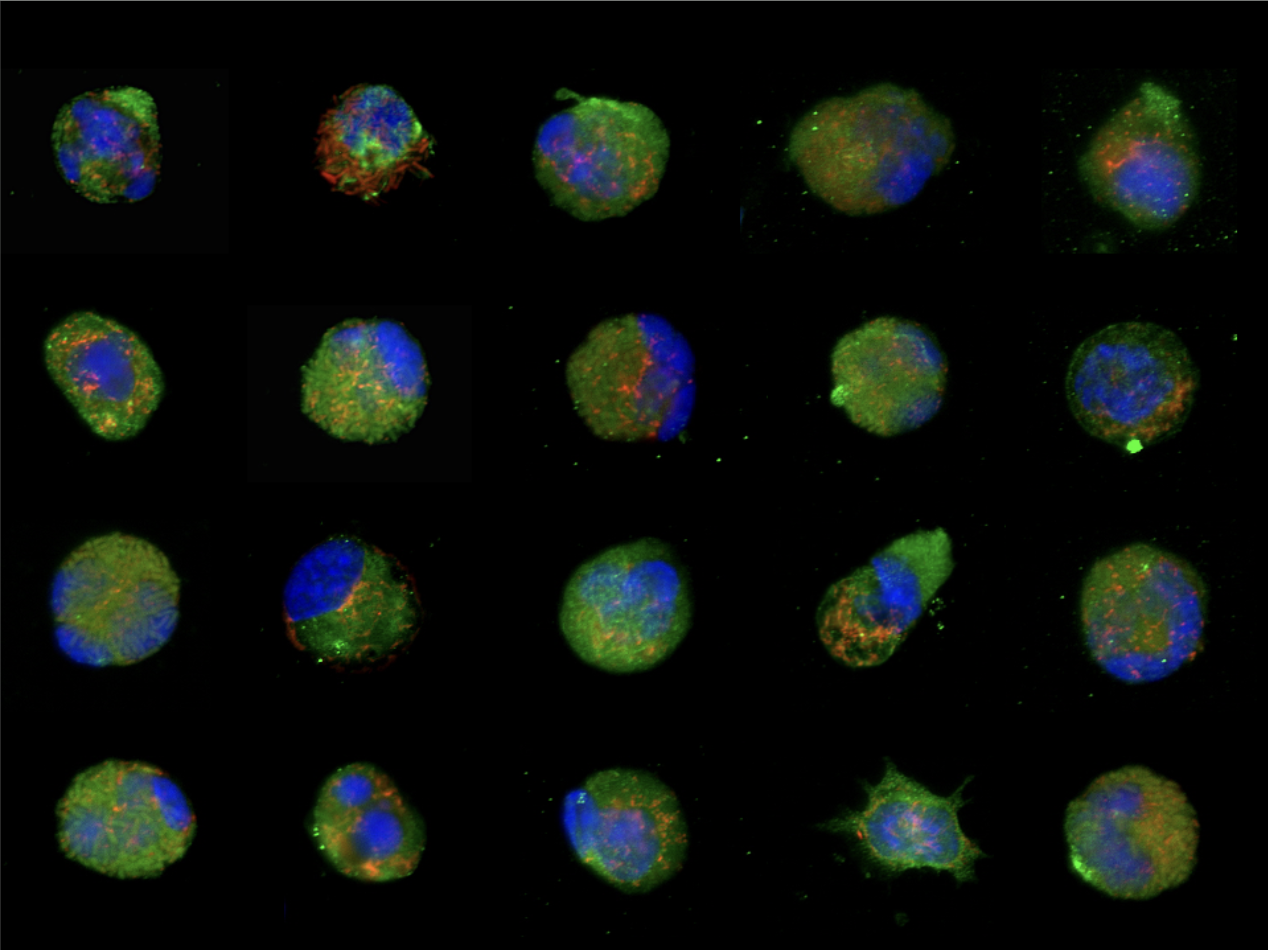
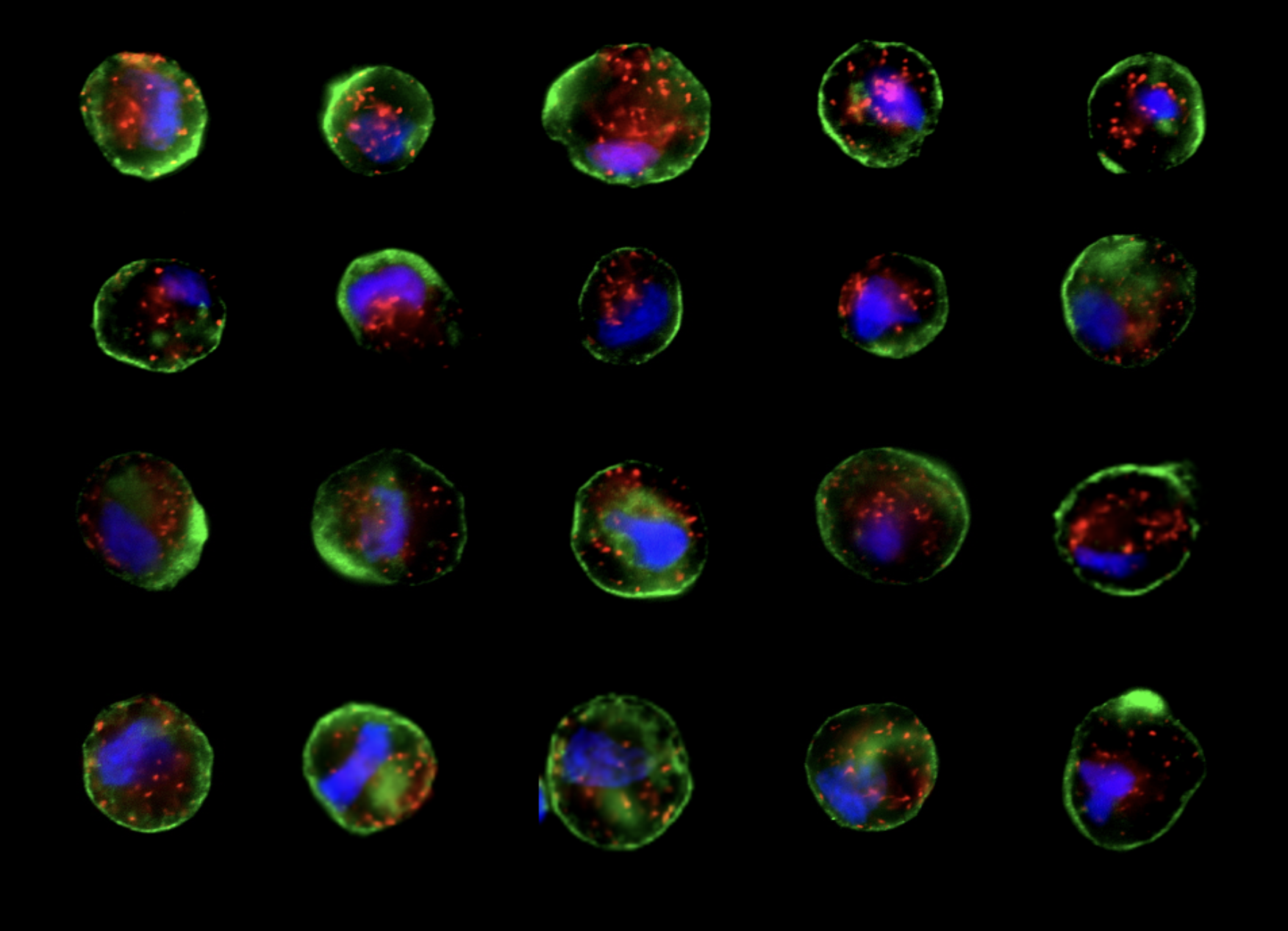
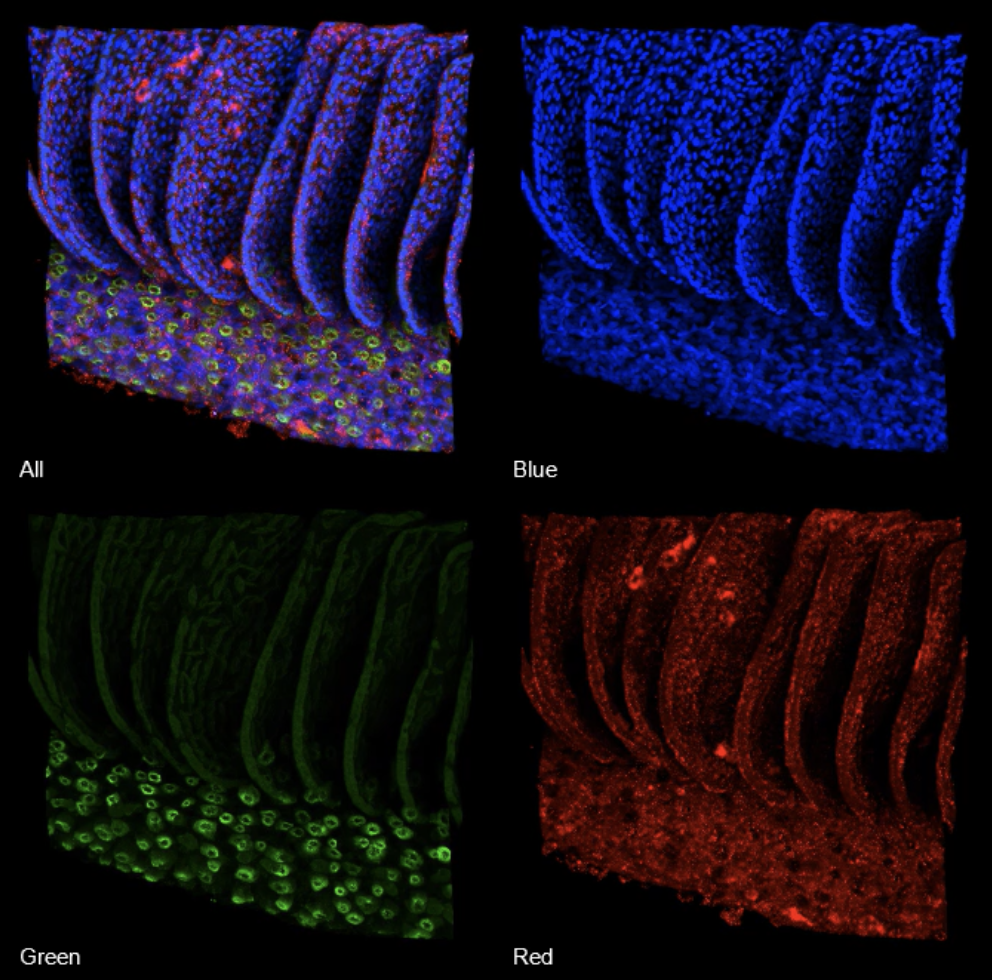
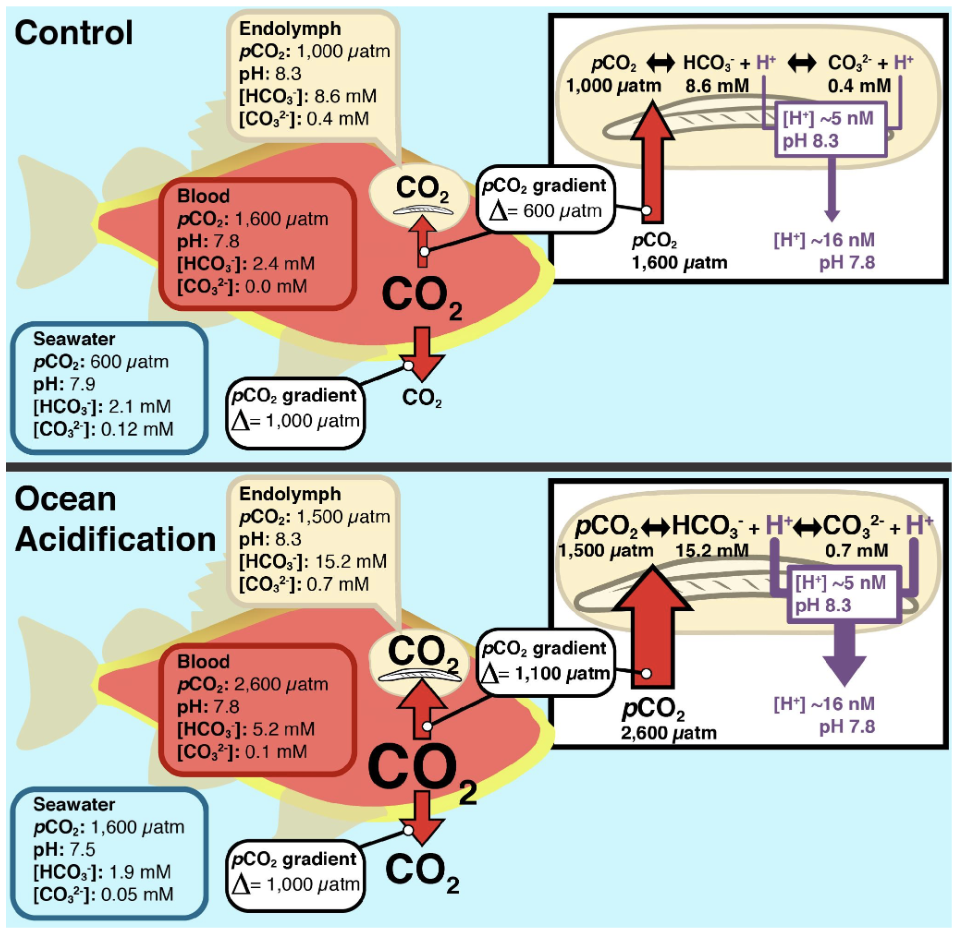
How do organisms maintain homeostasis while dealing with metabolic and environmental disturbances? Acid–base, ionic, and osmotic regulation are among the most fundamental physiological processes in aquatic life, shaping cellular function, organismal performance, and species distributions. We study the molecular, cellular, and physiological mechanisms that sense, signal, and correct acid–base and osmotic disturbances arising from both metabolism and environmental variability. Our work focuses on cellular and epithelial transport systems that regulate the movement of acid–base equivalents, ions, and water across membranes and environmental interfaces. By studying diverse aquatic species, including phytoplankton, fishes, crabs, mussels, and other invertebrates, we aim to identify both evolutionarily conserved mechanisms and species-specific solutions that enable organisms to function across diverse environments. As in our other research areas, we first define these mechanisms at molecular and cellular levels, and then examine how they operate under realistic environmental variability. This work provides a mechanistic framework for understanding adaptation, environmental tolerance, and range shifts under ongoing environmental change.